Showing posts with label bade ghulam ali khan. Show all posts

Monday, September 27, 2010

Gharana tradition : Patiala Kasur

Kasur (also spelt Qasur), a small town near Lahore, Pakistan, is in a region which was famous for the 'melody in its air and soil'. A large number of Sufi saints spread their message of love in the area. Their lives were imbued with music and they often presided over baithaks of rich classical fare. The great poet Bulleh Shah was from these parts and gave to the world his priceless sufiana kalam. The region saw the advent and growth of a great cultural era in which the dhrupad and khayal styles flourished along with the beautiful kafi, tappa and the rich folk music of the region.

It was from this ambience that Ustad Ali Baksh Khan and Ustad Kale Khan, with their abundant talent, brought to Patiala the fragrance, beauty and elegance of their own well established gharana of Kasur. From this fusion, emerged a powerful and melodious gayaki which was emphasized, clear and with meaningful bols, sparkling tans, intricate layakari and gamak. Genres of thumri and ghazal have a special place in this gharana. At the turn of the 20th century, Ali Baksh Khan was blessed with a son who was later to become the legendary Ustad Bade Ghulam Ali Khan. Other sons followed – Ustad Barkat Ali Khan, Ustad Mubarak Ali Khan and Ustad Aman Ali Khan. All these brothers, greatly inspired by the beauty of their inherited style, made their own invaluable Patiala-Kasur gayaki.

Bade Ghulam Ali Khan - Thumri - Ab Tohe Jane Nahi Dun :  Download


Ajoy Chakrabarty - Thumri - Kaisee Bajayee Re Shyam :  Download


Jagdish Prasad - Thumri - Chanchal Naar Dodhari Kataria :  Download


Parween Sultana - Khayal - Det Badhai Sain Ko :  Download


Ustad Bade Ghulam Ali Khan (1901-1968) was a giant in the world of music who brought the Patiala-Kasur gayaki to the international stage. His singing was chiseled by years of devoted riyaz and infused with his phenomenal creativity in an endless striving towards perfection. His was a full throated, highly cultivated and melodious voice in which he rendered intricate layakari with ease and dignified finesse. Bade Ghulam Ali Khan's contribution to the khayal thumri form was phenomenal and full of creativity. He also created the magnificent Surmandal, an instrument that has today become popular with most leading vocalists of the country.

.. more songs of other Gharanas »

Sunday, September 27, 2009

Four Songs : my Choice 6

After the partition of India in 1947, the new born Pakistan was so beset with insurmountable problems that fine arts virtually remained neglected. History’s largest migration of people had totally upset the equilibrium of the population not only physically but also emotionally and psychologically. During such times, the fine arts could not get the attention of the people. Classical music was neglected more than anything else. The musicians were totally frustrated as there were no takers. Many took refuge in Ghazal singing to make ends meet. The height of despair was reflected in the decision of Ustad Bade Ghulam Ali Khan to leave the country and settle back down in India, where connoisseurs of classical music were abound.

In remembrance of those days, here are a few songs of my choice, each one hand picked and posted here for your listening pleasure.

Bade Ghulam Ali Khan - Raga Darbari Kanada :  Download


Ajoy Chakrabarty - Raga Malkauns :  Download


Nirmalya Dey - Raga Bageshri :  Download


Jitendra Abhisheki - Raga Kafi :  Download


.. more Songs of my Choice »

Friday, July 10, 2009

Ja Kaga Ja : Go Crow Go

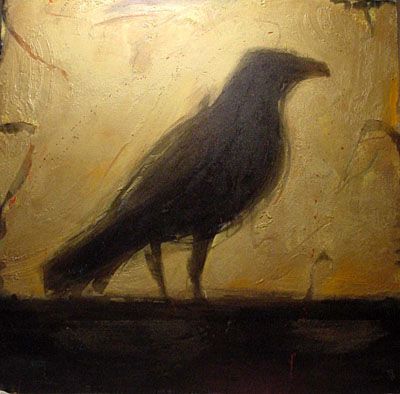
In India, the common house crow (kaga or kagwa in hindi) is a widespread resident, except in high altitudes and dense forests. It is wholly dependent on human habitation for it's survival. This highly vocal bird is seemingly unafraid of humans. Aggressive, it will attack and chase off any large bird of prey. Strangely, the crow has been given a place of pride in our classical music. For reasons unknown it has played the role of a lover's messenger ("Ja Kaga Ja"), which in many a lyrical khayals, is even promised a 'gold plated beak' in return of favours rendered ("Ab Ke Sawan Ghar Aaja"). Pigeons, the otherwise commonly known messenger birds, have been given a back seat here.

Vilayat Hussain Khan - Raga Bageshri Bahar :  (Download)


Bade Ghulam Ali Khan - Raga Desi :  (Download)


Begum Akhtar - Raga Pahadi :  (Download)


Pandit Jasraj - Raga Bilaskhani Todi :  (Download)


Shruti Sadolikar - Raga Desi :  (Download)


Parween Sultana - Raga Pahadi :  (Download)


Almost all vocalists have pleaded with this glossy black bird to pass on a message, in all Ragas possible, Raga Desi, Bageshri and Pahadi being the more common ones, although other Ragas are not being discounted.

Comments are welcome.

Thursday, July 09, 2009

All in the family

Among all classical musicians, Bade Ghulam Ali Khan was truly the king of emotions and thumris. He often used to say, "Many people have the misconception that classical music has no powers of expression. This is because generally our musicians are more interested in technical virtuosity. But emotion is the very soul of our music. In fact our music has the power to express the subtlest nuances of human emotions". Bade Ghulam Ali Khan proved his point by creating his own style, which was an excellent blend of impressive technical mastery, appealing and emotional expressions. With this extraordinary blend, Bade Ghulam Ali Khan could render fluent khayals, sprightly thumris, erotic ghazals and soulful bhajans with an artistry all his own.


Bade Ghulam Ali Khan - Kate Na Biraha Ki Raat :  (Download)


Bade Ghulam Ali Khan - Tirchhi Najaria Ke Baan :  (Download)


Barkat Ali Khan, Bade Ghulam Ali Khan's brother also had great talent. Some even say, the sweetness of his voice at times surpassed that of Bade Ghulam Ali Khan. Khan Saheb, however, allowed his brother to only accompany him on the harmonium, but never to sing with him in public. Therefore Barkat Ali Khan remained unknown to most music lovers. It is difficult to say why Bade Ghulam Ali Khan always kept his brother in the background and did not give him the chance to display his talent independently.


Barkat Ali Khan - Ratiyan Kidhar Ganwaeen :  (Download)


Barkat Ali Khan - Mora Saiyan Tanak Dhun Laye :  (Download)


Munawar Ali Khan, Bade Ghulam Ali Khan's younger son, was his constant companion and was being groomed to succeed him. He always accompanied Khan Saheb on the tanpura and being so close to his father, he imbibed the vast treasure of his father's musical knowledge. Naturally with such training and all the makings of a first grade artist, everyone expected him to follow in Bade Ghulam Ali Khan's footsteps. Unfortunately, Khan Saheb as with his brother Barkat Ali Khan, had always kept Munawar under his wing and never allowed him to bloom in his individual capacity.


Munawar Ali Khan - O Maar Daala Re Nazariya Milaikey :  (Download)


Munawar Ali Khan - Bhajan - Pag Ghunghroo :  (Download)


Raza Ali Khan is Munawar Ali Khan's son. He received his early training from his grandfather, Bade Ghulam Ali Khan and after that, extensively, from his father. He accompanied his father on concerts and sung alongside. Raza Ali Khan is an A-grade musician of the All India Radio. He is married to actress Neelima Azeem, mother of film actor Shahid Kapoor.


Raza Ali Khan - Prem Ke Phande Mein :  (Download)


Raza Ali Khan - Rang Laga Gayo :  (Download)


It is true that Bade Ghulam Ali Khan belonged to a long and illustrious musical lineage. But it was his genius that chiselled off the harsh crudities and angularites of the once 'dry' Patiala Gharana and lent it such a rare polish and glow that today it has achieved worldwide popularity. Bade Ghulam Ali Khan has left behind not only hundreds of singers trying to emulate him, but also thousands of music lovers who cherish the music of Patiala Gharana.

Comments are welcome.

Monday, June 15, 2009

Four Random Songs 4

Four songs that I picked up from here and there, while surfing the web :

Ashwini Bhide - Malaniya Layi :  (Download)


Bade Ghulam Ali Khan - Thumri Pahadi Live (Rare) :  (Download)


Bhimsen Joshi - Piya To Manat Nahi :  (Download)


Mitali Banerjee Bhawmik - Chhai Ghata Ghanghor :  (Download)


.. more Random Songs »

Comments are welcome.

Tuesday, March 17, 2009

Songs of Longing and Seperation

Unlike any other music of the world, hindustani classical music is not only abundant with songs for various moods of the human mind, but also songs for every hour of the day and season of the year. Monsoon, being an unique phenomenon in this part of the world, has an important place in our music.

Kajri (or Kajari), derived from the Hindi word Kajra or Kajal, (meaning Kohl or Black), is a genre of Hindustani classical music, popular in Uttar Pradesh and Bihar. In a country of sizzling hot summers, the black monsoon clouds bring with them relief and great joy. This is the moment for the Kajri to be sung.


It is often used to describe the longing of a maiden for her lover as the black monsoon cloud come hanging in the summer skies, and is often sung during the rainy season. It comes in the series of season songs, like Chaiti, Hori and Sawani, and is traditionally sung in the villages and towns of Uttar Pradesh : around Benares, Mirzapur, Mathura, Agra, Allahabad and the Bhojpur regions of Bihar.

Rasoolan Bai - Tarsat Jiyara Hamar :  (Download)


Begum Akhtar - Koyaliya Mat Kar Pukar :  (Download)


Birha (or Biraha) is another popular Folk song genre of Uttar Pradesh and Bihar. This genre is mood based and the basic theme revolves around the separation of lover and his beloved. Actually 'Birha' in Hindi means separation. The history of this genre is not very old and the earliest reference goes back to 17th century.

The possible origination of this folk genre is credited to the incidents where mostly men from small villages used to migrate to cities in search of livelihood. Often they had to leave their newly-weds behind in the village. The lament of separation from both the motherland and spouse led to the birth of Birha. The genre is extremely popular among the farmers and laborers in eastern Uttar Pradesh and Bihar.

Bade Ghulam Ali Khan - Naina More Taras Gaye :  (Download)


Siddheshwari Devi - Tadpat Bin Balam :  (Download)


In the mid-nineteenth century thousands of laborers from eastern Uttar Pradesh and Bihar were taken to Caribbean (West Indies) as sugar plantation laborers. In fact, the laborers and their descendents who now constitute a sizable population in the Caribbean still love this song genre. The best example of this is the growing popularity of Chutney Music, the Soca-Samba version of Birha, in the west especially in the Caribbean Islands.

Note : The songs posted above do not necessarily come under the genres of Kajri or Birha. These are merely reflective of the mood of the post. Songs of longing are also sung in the form of Thumri and Dadra.

Saturday, February 21, 2009

Anokha Ladla : Raga Darbari's favourite Kid

Raga Darbari Kanada has very often been described as the King of all Ragas and also, the Raga of the Kings. Here listen to a very famous Khayal 'Anokha Ladla' sung by various artists at different times and also in different styles. Some say it is a song on Lord Ram's childhood, 'anokha ladla khelan ko mange chanda' as in the Ramayana. The song was immortalised when Ustad Bade Ghulam Ali Khan presented it in his own inimitable style. Bade Ghulam Ali Khan was the renaissance man of hindustani classical music. He was one of the few artists who among themselves saw the transition of classical music from the courts of the kings to the common man.

Bade Ghulam Ali Khan :  (Download)


Nazakat & Salamat Ali Khan :  (Download)


Vilayat Khan (Sings as he plays the Sitar) :  (Download)


Balqees Khanum (Semi Classical) :  (Download)


Shahida Minni (Semi Classical) :  (Download)


Tina Sani (Semi Classical) :  (Download)


It is interesting and almost amusing to note how artists have improvised upon the song according to the need and occasion without allowing the basic raga structure to go haywire.

Comments are welcome.

Monday, August 27, 2007

Bade Ghulam Ali Khan


Ustad Bade Ghulam Ali Khan can be described as an artist who has had the maximum impact on the 20th Century Hindustani Classical Music scenario. Born in 1902 into a great musical lineage from Kasur in the Western Punjab, this great savant amalgamated the best of four traditions, his own Patiala - Kasur style, sculpturesque Behram Khani elements of Dhrupad, the intricate gyrations of Jaipur and finally the robust behlavas (embellishments) of Gwalior. But what actually characterised Bade Ghulam Ali Khan was an effervescent melodic quality which was concertised in a masterly flow of ideas which were delivered with a unique sense of alacrity, aided by one of the most pliable and dextrous voices ever heard in living memory in this land.

Bade Ghulam Ali Khan had a relatively short career span. He blazed the trails of Calcutta in 1938 and in the 1944 All India Music Conference in Bombay, was virtually anointed Lord of all he surveyed in the field of Indian Music. But 24 years later, he was dead, prematurely at 66, having given the World less of himself than it would have wished to have. The maestro’s approach to khayal was essentially traditional - as seen in the medium pace of his vilambit Khayal presentation and his style of straightforward sthaibharana avoiding permutations. The character of his Gayaki was derived from an inclination towards looking beyond the traditional method of intoning a Swara to discover unchartered facets of beauteous melody, often achieved by very subtle inflexions of notes. This approach was bom of a mind which always strove to find that beauty in Indian Music which went beyond the Raga itself.

For Bade Ghulam Ali Khan, ‘Taleem’ was but a means to a greater end where sheer melody and freedom of movement became unified His music was the joyous expression of an unfettered musical psyche. In ‘Thumri’, Bade Ghulam Ali Khan looked beyond the tradition of bol-banav where verbal and musical expressions are unified. He saw in Thumri an avenue for playing with notes with even greater abandon than was possible in the raga-restrained Khayal. From this perspective was born the now well-established Punjab-ang of Thumri.

Here is a rare live recording of the maestro in Raga Pahadi :