Thursday, November 19, 2009

Annapurna Devi : the genius who chose to be left alone

Some have heard of her. Few have met her. None truly know her. Sarod wizard Ustad Ali Akbar Khan said of her, she is 'simply great'. Pandit Ravi Shankar acknowledges her genius. Yet, none have heard her play. Mysterious, intriguing, she is like our own Greta Garbo, living in her own shadows, shutting herself out from the world in the cloistered confines of a city flat, seeking peace in an instrument her father taught her. She wants nothing from the world, from society. But if she decided to give of herself, the world would be a richer place.

Six floors up the elevator in a high-rise building, in one of the posh residential localities of Mumbai, lives this woman. No one sees her, not even her immediate neighbours. The board at the entrance of the building simply spells: Annapurna Devi. Another square board is nailed next to her doorbell. It reads :

1. The door will not be opened on Mondays and Fridays.
2. Please ring the bell only thrice.
3. If no one opens the door please leave your name and address.
~ Thank you very much. Inconvenience is regretted.
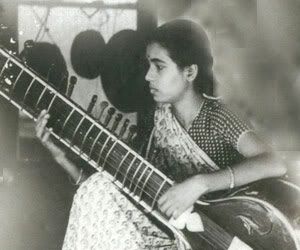


Annapurna Devi, who was born as Roshanara Khan in 1926 at Maihar in the state of Madhya Pradesh, India, is a maestro of Surbahar or the bass Sitar. Her father Ustad Allauddin Khan, who also happened to be her guru, was the founder of the famous Maihar Gharana or the Senia Maihar School and was regarded as one of the greatest instrumentalists of the 20th century. Sarod maestro Ustad Ali Akbar Khan was her brother and she married Pandit Ravi Shankar, also a pupil of Allauddin Khan, at a very early age. Annapurna Devi emerged as a proficient Surbahar maestro of the Maihar Gharana just within few years of taking music lessons.

Soon after she even started giving music lessons to some of the students of her father like Pandit Nikhil Banerjee and Ustad Bahadur Khan. Baba, as Allauddin Khan was called by his disciples, was a very strict man and his temper was well known. There were times when the boys were so petrified that they dared not approach Baba and the only person who had access to him was Annapurna. He taught her, and she in turn often taught the boys. The trio of Annapurna Devi, Ravi Shankar and Ali Akbar Khan, began a long and arduous journey, trying to plumb the depths of a 5000 year old tradition of Hindustani music.

Raga Kaushiki :  Download


Raga Manj Khamaj :  Download


Annapurna Devi's marriage to Ravi Shankar was arranged with the suggestion of Uday Shankar, his celebrated elder brother. Annapurna Devi, who was only 14, wedded Ravi Shankar when he was 21 years old. Though a tumultuous one, the marriage lasted for some 20 years during which the couple gave birth to a son, Shubhendra Shankar. It could have been a fairy tale or an eternal duet between two maestros, but somewhere at the height of the glory something happened and the relationship snapped like a thin thread.

There were whispers, as they were bound to be, given the fame of the two musicians and given the fact that they were husband and wife. Many say, Ravi Shankar fell in love with somebody else, a woman known as Kamala. Perhaps the affair became too big and Annapurna was definitely hurt by the entire thing. This and her father's subsequent death dealt a severe blow to her, something that she could never recover from. She became a recluse thereafter, totally cut off from the rest of the world.

During better times with Ravi Shankar :


Raga Yaman Kalyan (with Ravi Shankar on the Sitar) :  Download


By all accounts, Annapurna Devi's only public concert was staged in the early 1950s, and no one has ever heard her play the Surbahar or Sitar in public or private ever since. Few have seen her, fewer still have heard her play. She has performed a total of 11 times in her life. Finding a recording of hers is like locating a needle in a haystack. Her students say that she imparts instructions through singing and not through playing her instrument, and she conducts her lessons only in the late hours of the night, more often after midnight. What is more, she has remained inaccessible and unapproachable even to her own students without prior consent and appointment. Neither does she make herself available on telephone, nor entertain any visitors. She is allergic to press reporters, critics and lensmen.

As a teacher, she has had many noteworthy students like Ustad Aashish Khan, renowned flautist Hariprasad Chaurasia and others. She has not recorded any music albums. But some of her performances, notably Raga Kausi Kanara, Raga Manj Khamaj and Raga Yaman with Ravi Shankar have been secretly taped from her earlier concerts, and are available but not commercially. In spite of her avoidance of media limelight, she continues to be thought of as a classical instrumentalist of the highest calibre in India. All the awards she has received, including the Padma Bhushan in 1977, Sangeet Natak Akademi Award in 1991 and the Desikottama Award (highest honour conferred by the Vishwa Bharati University, Shantiniketan) in 1999, have been accepted in absentia.

Tuesday, November 17, 2009

Four droplets of Excellence

Every now and then one comes across small clips of excellent songs, tiny droplets from the vast ocean, which the world of hindustani classical music indeed is. The fuller versions either do not exist or the songs were not meant to be recorded for commercial purpose. The one by Zarina Begum is an amateur recording, sung by her when she was about 90 years old, simply for the benefit of an ardent fan. She is one of the remaining few from the courtesan era of the British Raj. She is playing the Harmonium herself, while Qurban Hussain, her husband, plays the Tabla. The recording was done at her one room house in Lucknow. Birju Maharaj, as we all know, is a renowned Kathak dancer. Very few know that he is an excellent singer too.

Zarina Begum - Najar Laagi Raja Tore Bangle Par :  Download


Birju Maharaj - Jane De Maika :  Download


Asad Amanat Ali Khan - Piya Bin Lage Nahi Jiya :  Download


Mehdi Hassan - Kaase Kahun Mori Sajani :  Download


Tuesday, November 03, 2009

Four Songs : my Choice 7

Here I come once again with a few songs of my choice. All the four artists featured this time are first timers on this blog.

Vasantrao Deshpande (1920-1983), as we all know was one of India's most illustrious classical vocalists. He was equally at ease with the thumri, dadra and ghazal forms. He was an academician too and earned a Ph.D on his thesis on Hindustani Classical music. He was invited to several educational institutions to deliver lectures on music, quite often with live demonstrations.

Ravi Kichlu (1932–1993) was a prominent classical Hindustani vocalist of Agra Gharana, who formed a well known duo with his brother Vijay Kichlu. He also played cricket for Uttar Pradesh.

Vasantrao Deshpande - Madhukauns - Daras Deo Mohe Ram :  Download


Ravi Kichlu - Jaunpuri - Phulwan Ki Gaggan Meinka Na Maro :  Download


Sheila Dhar (1929-2001), will not be remembered as much for her singing as for what she wrote about the practitioners and practice of singing. She was a pupil of Pandit Pran Nath of the Kirana Gharana. Born in a Mathur Kayastha family, she was married to P N Dhar, Principal Secretary of late Prime Minister of India, Indira Gandhi. She obtained her MA in English from Boston University. She was a renowned storyteller, musician, and authority on Hindustani classical music. In one of her memoirs she has recalled interesting tales about the Pandits and Ustads of classical music and their fondness for food. As she said quite often : "Raga, Rasoi, Pagree, kabhi kabhi ban jaye..." (melody, food and turban, seldomly come right).

Padmavati Shaligram, born in 1918 in Kolhapur, is one of the senior most vocalists of Hindustani music. She was groomed in the Jaipur Atrauli tradition. She has been performing in public since she was thirteen and climbed to the height of success and glory very early in life. She has been a top ranked performer with the All India Radio, besides featuring in numerous concerts in both the northern and southern states of the country.

Sheila Dhar - Raga Kausi Kanhra :  Download


Padmavati Shaligram - Raga Nand :  Download


.. more Songs of my Choice »

Saturday, October 31, 2009

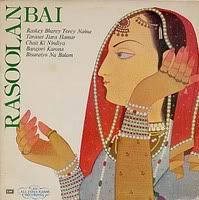
Rasoolan Bai : the Other Song

On 29th August, 2009, a documentary film was screened at the Bangalore International Centre in Bangalore. The documentary, The Other Song, directed by a young Saba Dewan narrates the story of a lost song recorded in 1935. The singer was the famous Thumri singer of Benares, Rasoolan Bai. The 'other song' is a variant of the celebrated Bhairavi Thumri sung by Rasoolan Bai, "Phool gendawa na maaro, lagat karejwa mein chot". But for once she sang jobanwa instead of karejwa in that recording. Till the middle of the 20th century, dancing girls or tawaifs were the only professional women musicians of India. They were highly educated women adept at the arts, literature, poetry and music, when large sections of Indian women were illiterate. Those were also the years when the purists of Indian classical music laid down the norms that formed the musical standards for the time. Describing such songs as 'immoral' and 'explicit', the music of the tawaif became immodest for respectable households. No wonder the song got banished into oblivion.


Rasoolan Bai, an excellent singer of the Poorab Ang Thumri, Dadra, Chaiti, Hori and Kajri, was born in 1902 in a village near Benares. She was a celebrated singer of her time and was much in demand in the courts of princely states. She formed the quartet of singing queens of that time along with Begum Akhtar, Badi Moti Bai and Siddheshwari Devi. Rasoolan Bai won the prestigious Sangeet Natak Academy Award in 1957, the second woman to be so honored after Kesarbai Kerkar.

Bhairavi - Phool Gendawa Na Maaro, Lagat Karejwa Mein Chot :  Download


Dadra - Aan Baan Jiyara Mein Lage :  Download


A Sanskrit scholar and a connoisseur of music mentioned to Saba Dewan, Rasoolan Bai's famous Thumri and dared her into finding the version which had jobanwa and not karejwa. The film which sets out to be Saba Dewan's search for the lost Thumri gradually unravels the many concealed layers, the tawaif as the treasure house of the Thumri, her way of life, her glorious years, now pushed to the margins, and the 'other song' right at the bottom of it all. In a moving section, the film recounts the efforts by the tawaifs to contribute to the non-cooperation movement, in response to Mahatma Gandhi's call in the early 1920s. When told, Mahatma Gandhi was furious with them. He would not accept them as workers, or take their donation, unless they gave up on their 'unworthy profession that made them worse than thieves'.


Thumri Piloo - Saiyan Bides Gaye :  Download


Dadra Piloo - Kankar Mohe Lag Jaihe :  Download


It was obvious that Rasoolan Bai never sang the 'other' song again. She eventually ended up in penury, running a small tea stall in Allahabad, ironically right next to the All India Radio building where she once sang. She died on 15th December, 1974. Not more than 15-20 of her recordings are available now. Which brings us back to the missing recording. Saba Dewan did eventually track it down, thanks to another dogged sleuth, a professor of English in Kolkata, who listened to each Rasoolan Bai record in his collection and found the jobanwa version.

.. more Rasoolan Bai Songs »

Wednesday, October 28, 2009

Sounds of the Strings : Sitar

From rudimentary folk beginnings, string instruments of India have now reached the heights of concert glory, giving endless moments of ecstasy and delight to listeners. The strumming of a series of taut metallic strings is capable of creating an enthralling experience of vitality and emotion. As the player slides over the notes, the listener experiences moments of pure bliss. There is an entire tradition in Indian music where musical instruments of the stringed variety form a separate classification, termed as 'Tata Vadya' or the sound of the strings. These instruments are also termed as chordophonic, which means string sounds.


Kanwar Sain Trikha - Raga Bageshri :  Download


Nikhil Banerjee - Raga Malkauns :  Download


In the western world the Sitar is perhaps the most well known musical instrument of India. The Sitar is a plucked string instrument that uses sympathetic strings and a long hollow neck along with a gourd resonating chamber in order to produce a very rich musical sound along with a complex harmonic resonance. The Sitar is predominantly used in Hindustani classical music. This instrument is one that has been used all throughout the Indian sub continent, particularly in Bangladesh, India and Pakistan. What's not known is its exact origin. The Sitar has been in existence for thousands of years in one form or another, but there are several theories as to who invented it.

Rais Khan - Raga Darbari Kanada :  Download


Usman Khan - Raga Kaushik Ranjani :  Download


There is a common story attributing the invention of the Sitar to Amir Khusrau. Amir Khusrau was a great personality and is an icon for the early development of Hindustani classical music. He lived around 1300 AD. As common as this story is, it has no basis in historical fact. The Sitar was clearly nonexistent until the time of the collapse of the Mughal Empire. Most people agree that the modern Sitar first appeared in the 1700s at the end of the Mughal Empire.

Raga Bairagi at a Sitar shop in Paharganj, New Delhi :  Download


Legendary musicians associated with the Sitar include Vilayat Khan, one of the most prominent Sitar players of the 20th century, and of course Ravi Shankar, who brought the Sitar to Woodstock.