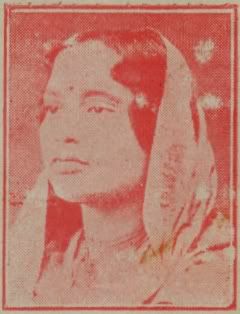
Zohra Bai (1868-1913) of the Agra Gharana, or Zohra Bai Agrewali as she came to be known as, was easily the best female singer at the turn of the 19th century. Along with Gauhar Jan, she marks the dying phase of the courtesan singing tradition in Indian classical music. She had her talim from Ustad Sher Khan, Ustad Kallan Khan and Mehboob Khan, the great composers of Khayals and Thumris.
Known equally for Khayal as well as lighter varieties of classical music, she learnt Thumri and Ghazals from Ahmad Khan of Dacca. Her many records going back to the first 15 years of the last century have not yet been dated, unlike records of some of her contemporaries. It is said that Faiyaz Khan, the greatest Ustad of the Agra Gharana, was influenced by Zohra Bai's style of singing. The famed Bade Ghulam Ali Khan of the Patiala Kasur Gharana also held her in very high esteem.
Zohra Bai Agrewali - Basant - Tore Jele Jele Ede Ede :
A contemporary of the legendary Gauhar Jan, prima donna of early recordings of Indian music, Indubala (more famously known as Miss Indubala) was the daughter of Rajbala, a circus trapeze artiste. Rajbala married Motilal Bose, owner of The Great Bengal Circus, also known as Bose's Circus or Professor Bose's Circus. The marriage was not really accepted by Motilal's family as he was already married to another woman. Indubala was born in November, 1899 at Amritsar, where the circus party had gone for performance. The initial plan was to train Indubala as a nurse and she was admitted as a trainee in a hospital in the Pataldanga locality of Calcutta. Indubala did not take fancy to the job and ran away from the hospital, much to the disappointment of her mother, who never wanted her only daughter to be forced into a life of indignity. After this incident Indubala's musical training started. This also marked the entry of Indubala into the red light world. Amongst her trainers was Gauhar Jan. Apart from music, Indubala also learned etiquette from the elder artiste and developed a close friendship with her. This association provided Indubala with valuable musical knowledge and experience.
In 1916, Indubala recorded her first songs. In the beginning she did not take any money from the Gramophone Company and as such was credited in the records as Miss Indubala (Amateur). She was not the first amateur artiste of the company but enjoyed the privilege of announcing her name at the end of each song saying 'My name is Indubala'. The amateur status continued for a fairly long period. Later on she received Rs. 200 per record and also received a royalty of 5 per cent over the sales. To Indubala also goes the credit of being the first Bengali artiste to record Hindustani songs for the Gramophone Company. For the All India Radio, Indubala first sang on the second day of the radio's broadcasting in 1927 in Calcutta and went on singing in this medium for nearly fifty years. Indubala sang not only from Calcutta but from several other stations by special invitation from all over India. Apart from discs and the radio, Indubala was well established by the 1930s in cultural functions all over India. In 1936 she was appointed court musician to the Maharaja of Mysore. She received a monthly salary of Rs. 250 that continued till the 1960s.
In all, Indubala had recorded some 280 songs, including about 240 classical songs, the rest being from films. The songs posted below are very rarely found anywhere else. You may easily term these as my find of the year.
Indubala - Na Maro Pichkari :
Indubala - Mero Yaad Ayo Saiyan :
Indubala - Piya Kay Milan Hum Jaeb :
Indubala - Kahe Ko Neha Lagaye :
Indubala - Mohe Panghat Par Nandlal :
Indubala - Tum Radhe Bano Shyam :
Indubala - Chait Ki Nindiya :
The government of India never considered her name for any award. The Sangeet Natak Academy however honored her with a lifetime achievement award in 1975. In personal life, Indubala was most humble and polite but bold in her behavior and was never ashamed to admit or discuss her origin. Even when established as a major singing artiste with an all India fame, she refused to move out to a respectable place leaving her residence in Rambagan, a notorious red light area of Calcutta. Her end came on the 30th day of November, 1984 after a prolonged illness.
Are Rahul Gandhi, scion of the Nehru/Gandhi family, and actor Sanjay Dutt, son of film stars of yesteryear, Nargis and Sunil Dutt, related to each other? Yes, if you believe IMDB, an Internet Movie Database site, owned by Amazon.com, a Fortune 500 company. Jaddan Bai, mother of Nargis, was born in Benares, around the year 1900. She was rumoured to be the illegitimate daughter of Motilal Nehru and famous courtesan Daleep Bai. Her mother (before she became a courtesan) hailed from a Brahmin family but was abducted by a group of trained tawaifs. Jaddan Bai was born a Hindu, picked from a mela of dancing girls when she was a child and groomed a tawaif. Though Jaddan was born in Benares, she was brought up in Allahabad. Jaddan Bai, became a disciple of noted Thumri singer Ustad Moijuddin Khan and the equally noted Ustad Barkat Ali Khan, younger brother of Ustad Bade Ghulam Ali Khan. Jaddan Bai became a very famous singer, composer, actress and filmmaker and was a good friend of Mehboob Khan who later became Nargis's mentor.
Jaddan Bai had three children from three different men. The story of the union of Jaddan and Mohanbabu is very interesting. Uttamchand Mohanchand belonged to an orthodox Mohyal Brahmin family of Rawalpindi. He was to go to England to study medicine but heard the voice of Jaddan Bai and fell in love with her. His family refused to accept Jaddan Bai as their daughter-in-law but that did not deter him from marrying her and dedicating his entire life to her. Nargis was named Fatima A Rashid by her father but she later adopted the name Nargis for Hindi movies. Jaddan Bai's two sons from different men, Akthar Hussain and Anwar Hussain became film directors and actors.
Jaddan Bai - Lagat Karejawa Mein Chot :
Jaddan Bai - Roop Joban :
Jaddan Bai - Tere Sang Raja :
Jaddan Bai cast Nargis in Talashe Haq (1935), becoming the first woman composer of Indian cinema. In 1936, Jaddan Bai established Sangeet Films, producing films featuring her daughter, Nargis, as a child artiste. However, failing family fortunes forced Jaddan Bai to cast her daughter in leading roles from the tender age of fourteen and Nargis became the sole bread-earner for the family. Jaddan Bai died on 8th April, 1949.
Disclaimer : The information on Jaddan Bai was collected from various credible and not-so-credible sources on the internet. The author of this blog does not in anyway mean to hurt the sentiments of anyone alive or disregard the souls of the dead.
Kamla Jharia's real name was Kamla Singh. She lived in the palace of the Maharaja of Jharia (a town in Dhanbad district, coal capital of India). Her parents probably worked in the palace in some capacity. K Mallick, who at the time was a very popular gramophone singer, was invited to the palace to sing at the court of Maharaja Shiv Prasad on the occasion of his marriage. The Maharaja was so pleased with his performance that he appointed him court singer in Jharia. It was here that K Mallick discovered Kamla's musical talent and brought her to Calcutta and introduced her to HMV authorities.
Kamla Jharia - Jo Khanjar Wo :
Kamla Jharia - Jalwanuma Wo Shauq :
Kamla Jharia - Ari Dulhaniya :
Kamla Jharia recorded four songs for HMV in 1930 and went back to Jharia. She was paid 65 Rupees for the four songs. The authorities had some problem in naming the artist. They knew her name but not her surname. They could not credit her as Miss Kamla because there was already one singer of the same name. Finally it was decided to identify her as Miss Kamla Jharia keeping in mind her place of residence and thus began her illustrious musical career. Kamla became closely associated with Tulsi Lahiri, who was a film director, producer and music director, and lived with him as his wife.
Kamla Jharia - Kaise Kate Din :
Kamla Jharia - Nindiya Lagi Main So Na Saki :
Kamla Jharia - Piya Nahin Aaye :
Kamla Jharia sang in Hindi, Bengali, Urdu, Marathi, Punjabi, Gujarati and many other Indian languages. At that time no other artist would sing in so many different languages which explains her all India status and popularity. Her singing career spanned over three decades. In 1976, The Gramophone Company of India honoured her with a Gold Disc, as a mark of lifetime achievement. In 1977, during the celebration of the golden jubilee of All India Radio, she was felicitated as one of the living legends who had taken part right from the beginning of All India Radio. Kamla Jharia suffered from chronic asthma for long and passed away on 20th December, 1979.
During 1902-1908 many ordinary artists of that period recorded for The Gramophone Company. They were the Bais, Jans or Bandis, otherwise known as dancing girls or courtesans, living under the patronage of kings and wealthy zamindars (landlords). Most of them belonged to Delhi, Agra, Lucknow, Allahabad, Benares, Patna and Calcutta. Among these many non-descript dancer singers was one called Mohammad Bandi of Patna. Until 1908, it was customary for all artists to announce their names at the end of each recording. This was necessary to facilitate the record pressing company in making the record labels. Listen to Mohammad Bandi announcing her name at the end of first three songs. These recordings are very rare and of great historical importance.
Mohammad Bandi - Holi (1907) :
Mohammad Bandi - Barwa - Tori Banki Banki Chitwan (1907) :
Mohammad Bandi - Raga Sindhu Kafi (1907) :
Mohammad Bandi - Bayeen Nayan Mori Phadke (1908) :
History will always remember that the first gramophone record in India was cut in 1902 and the singer was Gauhar Jan. It is believed that very few women, during those early days, ventured into recording. It was Gauhar Jan, an artist of considerable repute, who broke this taboo. She was called the Gramophone Girl and in some of the later records she was described as the Dancing Girl of Calcutta. That first record of hers turned a best seller. Thereafter, during 1902-1910, some 500 artists made recordings for the Gramophone Company. One of them was a teenage dancing girl called Achhan Bai. Here I present to you some songs recorded by her, which I presume are the only ones left preserved. Take note of the announcements in first three songs.
Achhan Bai - Chaiti (1908) :
Achhan Bai - Raga Desh (1908) :
Achhan Bai - Piloo Thumri (1908) :
Preserving these 78rpm discs were always cumbersome and so naturally, even the Gramophone Company of India, that held monopoly over recordings for a long while, dispensed with most of their collections. Many people even painted on these discs and used them as wall decorations, while others moulded them into shapes that could be used as Paan daan (betel leaf box). These boxes were sold for one Rupee, while the 78rpm record cost just four annas (16 paise).
Then, there were these businessmen from Bombay who reportedly bought all the 78rpms they could from the market and even from private collectors, on the pretext that they were attempting to save those ancient recordings through some modern technology. It was just after the World War, and there was restriction on the import of lac or shellac, which these shrewd businessmen knew, would be in short supply. The 78rpm gramophone records were made of high quality, purified lac. All the piles of records they gathered were then melted to obtain this substance. And thus was lost precious music and documented history.
Achhan Bai - Holi (1910) :
Achhan Bai - Raga Kafi Holi (1910) :
Achhan Bai - Raga Khamaj (1910) :
Achhan Bai - Thumri (1910) :
Rising from the ruins, some gems from the past will, however, continue to surface, thanks to a few passionate collectors living unrecognized in several parts of India.
Music is an art that lives and dies in time, unless preserved by human memory or by technological reproduction. The recorded music of India, especially that recorded in the 78rpm format during the first five decades of the 20th century, presents a fascinating encounter between technology and music. While the records were an enabling medium in which music could be circulated and preserved, the limits of that technology, just over 3 minutes to a side in an ordinary 10-inch 78rpm disc, presented musicians with a challenge that was all the more difficult given the nature of Indian music. The vocalists took on the challenge, a remarkable achievement in view of the conflict between technology and creativity.
We are lucky to have a huge collection of recordings that date back to the beginnings of the 20th century. By mid 1908, it is estimated that there was upwards of 10,000 different recordings of the various styles of Indian music in the market. A large portion of this collection remains unheard by, and inaccessible to, contemporary audiences. Until the advent of vinyl around the 1940s, most gramophone records were pressed from shellac compounds. This use was common until the 1950s, and continued into the 1970s in some non-Western countries. Shellac is a resin scraped from the bark of the trees where the female lac insects deposit it to provide a sticky hold on the trunk. The insects suck the sap of the tree and excrete lac almost constantly. It takes about 100,000 insects to make 500 grams of shellac flakes.
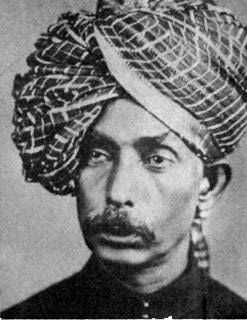
Abdul Karim Khan (1872-1937) is regarded as one of the most important Hindustani classical singers, recorded on 78rpms, during the early 20th century. Abdul Karim Khan was born into a family of musicians in the village of Kirana in Haryana state in north-central India. The Kirana Gharana of singing extends to his ancestors but it is most commonly associated with his style because of his prolific teaching, performing and recording in the first part of the 20th century. Abdul Karim Khan was appointed as a court musician by the Raja of Baroda state in Northwest India. But when Abdul Karim Khan fell in love with one of the prince's daughters, Tarabai Mane, who was his student at the time, the class difference between the royalty and musician-servants forced the two lovers to abscond in order to stay together. They landed further south, in Bombay, where Abdul Karim Khan taught, sang and, in 1905, recorded about thirty performances for the Gramophone Company. That same year, his daughter, the illustrious Hirabai Barodekar, was born.
Sarpada Khayal - Gopala Mori Karuna :
Jogiya - Piya Ke Milan Ki Aas :
Tyagaraja's Kriti - Rama Nee Samanamevaru :
Bhairavi Thumri - Jamuna Ke Teer Kanha :
Abdul Karim Khan felt that a musician should no longer simply inhabit a court as a paid servant, and became an innovator in charging admission fee for classical concerts. Meanwhile, during the period of increasing modernization and the anti-colonial struggle lead by Mahatma Gandhi, Abdul Karim Khan refused to record again until the mid-30s, when he accepted offers from the British-owned Gramophone Company's primary competitor, German-based Odeon. From 1934 until 1936, just a year before his death, he recorded several dozen pieces. He died between a tour in 1937, on a railway station, by simply turning to the man next to him and saying "I'm going now", then pulling down his turban and dying on the spot.
"Ustad Abdul Karim Khan's recording of the composition Jamuna Ke Teer Kanha in Raga Bhairavi stands as one of the great masterpieces of music. When I first heard the recordings of Abdul Karim Khan I thought that perhaps it would be best if I gave up singing, get a cabin up in the mountains, stack it with a record player and recordings of Abdul Karim Khan, and just listen for the rest of my life." ~ La Monte Young, American singer, composer and musician.