Showing posts with label kirtan. Show all posts

Monday, September 01, 2008

the Art of Kirtan : a Revelation

"Perhaps the most ambiguous genre of dance music, Trance music could be described as a melodic, more or less freeform style of music. While there is no strict definition for trance, songs of this genre are usually characterized as being accessible and having anthemic and psychedelic qualities. The best way to generally describe the trance genre is that of dance music based around rifts and anthems, which can be either highly energetic or very chilled out."
- wikipedia


Now, whenever I listen to Trance music which I do quite often, it always reminds me of the similar psychedelic effect that the Kirtans or for that matter the Qawwalis of our sub continent produce on the listener.

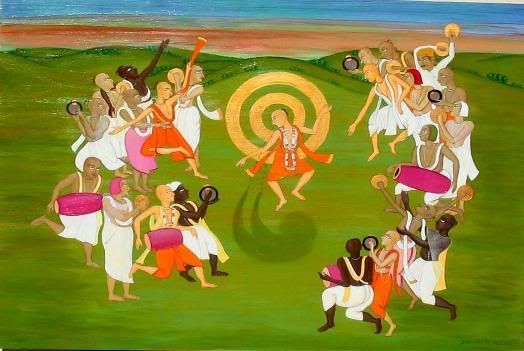
By repeating simple mantras over and over, faster and faster, the kirtan is an easy way for people to experience some freedom from the daily chatter of the mind. And while it is true that we can sing these chants in the solitude of our own home, there is nothing like the magic of chanting live with musicians and hundreds of participants - from kids to seniors - all adding their energy to the chant. People often say they feel 'buzzed' for days following such a chanting experience.

So what gives us that buzz ?? Something about the kirtan experience goes beyond the music itself, goes to a deeper experience of vibration. We all resonate at different frequencies, and these frequencies change according to what we are doing and thinking. So when we are all doing the same thing - chanting, breathing, and moving to the same rhythms - our vibrations begin to synchronize and the resulting experience is very powerful. So even if you're having a truly rotten day, it may be difficult to hold onto those feelings during the chant experience. If you were only to sit in the room without participating, the idea is that you could still feel the shift. Something happens - the energy begins to activate the spirit that exists within us all.

Although the kirtan involves music, the underlying art of kirtan chanting is not actually about musical ability or training - it is about the heart. Everyone can participate, regardless of age or cultural background. The purpose of this music is to get us out of our heads and into our hearts. Typically, the songs can last for 20-30 minutes each with a few moments of silence in between each song so you can soak it all up. The longer songs allow for deeper experience of the effects, and with the simple, repetitive lyrics (it's a chant, after all !!) we really don't have to think much about the words.
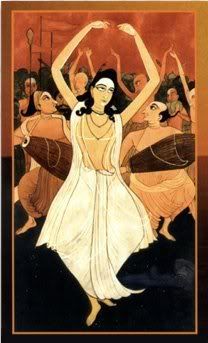


In fact, because the ancient Sanskrit lyrics are not familiar to many of us, these words take us away from the mind's constant chatter a little easier. The powerful healing and transformational energies of these ancient chants can help to reconnect us to the Ever-Present and Eternal Being that lies within us all. All the mantras, melodies, and instruments of kirtan are designed to lead us toward this meditative state.

We provide floor seating in the traditional style of kirtan events in India (and yes, we also provide chairs for those who prefer chairs), and this living-room style music experience allows people to sink into themselves, to relax and ground themselves during the chants. Most of us spend the day in our heads, running here and there, thinking about where we have to be and what we have to do next. The kirtan gives us a time to come back to our center. And when this happens, beautiful things begin to unfold. Feelings of inspiration, peace, and a sense of connectedness are common experiences.

Kirtan helps the mind become quiet, and when the mind quiets, we can begin to perceive the mystical things, the sacred experiences, that are around us always. In the silence between the songs, when the song stops, you can feel something. And that something is you. There is no greater experience than the experience of one's Self. And that vibration is always within you, that vibration is you. That's the beauty of any chant experience - with little or no effort we can experience and enjoy the vibrations of peace, energy, healing and inspiration that are always within us.

' Siya Ram mai sab jag jani,
karahun pranam jori jug pani
'
- Tulsidas

Listen to this mesmerizing invocation by Jai Uttal on 'kirtan' and what it means to him :

Jai Uttal - An Introduction to Kirtan :  (Download)


Listen and live in peace !!

Excerpts courtesy : Ragani

Thursday, November 22, 2007

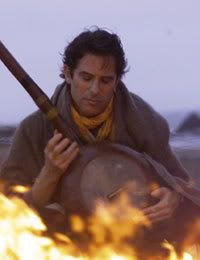
Jai Uttal : the Enchanter


Until a few days ago if someone told me there was this singer called Jai Uttal, I would have shrugged it off. But today I am enchanted by this american man whose voice has enthralled me during the past few days.

I have listened to many of these american singers and preachers who have devoted most of their lives singing Hindu hymns and chants and have made a name for themselves in this special branch of hindustani classical music popularly known as bhajan, kirtan (or keertan) or chant as it is popularly known worldwide.

Krishna Das (not to be confused with Krishna Prema Das) is a well known name. Others are Bhagavan Das and Ram Dass to name a few. Some female voices are also known in India like Deva Premal and Jaya Lakshmi. Most of them are americans by birth (one of them is Irish as far as I remember) and all of them have made singing and teaching Hindu practices and Yoga as their profession. Most of them are also composing and singing 'Yoga Music' (as they call it) with the recent spurt in the popularity of Yoga worldwide notwithstanding.

But Jai Uttal is a little different from the other singers I have mentioned. He is Indian to the soul. Whereas other singers still retain their 'foreign' (or american) accent in their singing and inadvertently sound similar to ISKCON chanters, Jai Uttal sounds perfectly Indian. In fact due to his Indian sounding name and total sub continent accent I mistook him to be an Indian. Moreover his is a 'classically-trained-sounding' voice.

Incidently all the above mentioned male singers including Jai Uttal are known to be the disciples of Neem Karoli Baba, a revered saintly figure belonging to Akbarpur, Firozabad a town near Agra in India.

Jai Uttal has played Motown songs in cover bands and busked for change on the streets. Both of those experiences have stood him in good stead for his musical career, which finds his music straddling the divide between world and new age.

Born in New York City in 1952, Uttal grew up in the music business - his father worked for a record label - and at the age of seven he began piano lessons. Those were followed by banjo, guitar, and harmonica as Uttal began to discover American roots music, most especially the old-time banjo picking of Appalachian musician Roscoe Holcomb.

But his true spiritual epiphany came when he was 17 and first heard Indian music, which "touched my heart like sounds of my home," he said. "Then I got all the Indian albums I could, and jammed along on guitar with Ravi Shankar records."

His obsession became so great that at the age of 19 he headed for the West Coast, to study sarod and voice with the legendary Ali Akbar Khan. Eighteen months after that he traveled even further - to India itself, to experience the music and the culture first-hand. Renting a house in the Bengal city of Bhopur for $15 a month, he came to know singing street musicians the Bauls of Bengal, and started playing and traveling with them.

On his return to the U.S., he became more diligent in his study of Indian music, while supporting himself by playing guitar in bands whose material ranged from Motown covers to punk to blues.


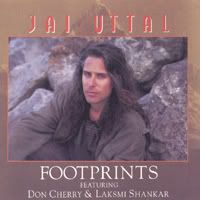
His break came in 1991 when Triloka released his debut, Footprints, which included an appearance by jazz and world music innovator Don Cherry. With his band, the Pagan Love Orchestra, Uttal continued to mine spiritual, Indian-inflected music two years later on Monkey, which hit the Top Ten on the world music charts. Uttal also found himself producing his mentor, Ali Akbar Khan, for two records, Journey and Garden of Dreams, which found the maestro working with a Western orchestra for the first time. Uttal's next release, 1994's Beggars and Saints was his tribute to the Bauls of Bengal, in thanks for his formative time in Bhopur.

Three years later came Shiva Station, which was mixed by innovative producer Bill Laswell. After that he concentrated on touring with his band rather than recording. A compilation of his four Triloka albums appeared as Spirit Room in July 2000, shortly before the self-released Live Kirtan and Pagan Remixes, which, along with remixes of three Pagan Love Orchestra tracks, was comprised of chanting by Uttal recorded live in a yoga studio. It was followed by another remix EP, Guru Brahma/Malkouns, which included two cuts mixed by Asian Underground star Talvin Singh.

Courtesy : Chris Nickson

Listen to Jai Uttal singing Guru Brahma in his ever enchanting voice :


I also urge you to listen to this captivating song Bajrangi which he has rendered in Raga Durga (please correct me if I am wrong) :


Find more music of Jai Uttal in my new music folder at eSnips : Indian.Raga.New.Age.