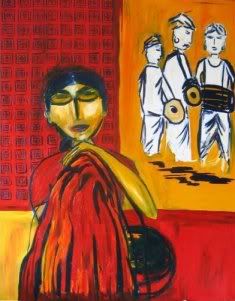
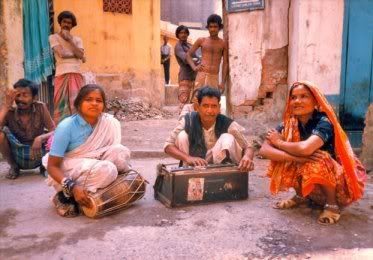
During our growing years, we Indians are exposed to a lot of rural folk as well as urban street music. It is noticed that the amorphous nature of music has given rise to an unique amalgam of folk music and popular cinema sounds, being performed by musicians on stages and arenas, depicting the cultural experience of urban life and the streets. One can easily relate street music with the multi-dimensions of street culture.
There is an evident cross fertilisation between the two musical forms, with both taking from, and responding to the other. The Indian film music industry has a strong influence on popular Indian culture and while it has shaped public preferences, it has also borrowed from classical music forms. One common belief about street musicians is of them being too lazy to get a 'real' job, harassing people on the streets with 'inferior' or 'crude' acts to solicit money to support a degenerate lifestyle. This perception is not confined to this part of the world only.
Street music is perceived as a 'lesser' performing art, an illegitimate musical form. However, it continues to endure this viewpoint, surviving elitist ideas of 'high' art. Moreover, street music is being increasingly absorbed into mainstream musical forms but without recognition. Lack of recognition of this art form, deprive the artists of social and economic benefits that are rightfully theirs.
The homespun, creative and intelligent construction of musical instruments made by the artists themselves, mirror the many dimensions of the artist. Streets and their culture lie at the heart of public life in contemporary India, especially in cities where urban housing is crowded and uncomfortable. Its streets act as thoroughfares, bazaars, theatres and most of all, a setting whose culture is constantly changing and evolving with time.
Holi is one of India's most vibrant and fun-filled festivals and it has a unique style and form in each part of the country that is reflected in the music that is associated with the festival. The musical forms associated with Holi vary from region to region as one travels from the north-west to extreme east of the country, down to the southern region. Primarily though, the compositions are based on the mythological references and tales from folklore.
Abida Parveen - Holi Khelan Aaya Piya : (Download)
Shobha Gurtu - Aaj Biraj Mein Holi Hai Rasiya : (Download)
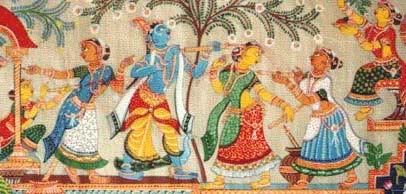
HoRi is the most popular type of Dhrupad sung on the festival of Holi. The compositions here describe the spring season. These compositions are mainly based on the love pranks of Krishna and Radha. Interestingly it has both classical as well as semi-classical connections. Horis sung as a concluding portion of a Dhrupad recital are classical in nature as well as treatment. Those Horis, which are sung in semi-classical form, are in ragas like Khamaj, Kafi etc. Significantly, these horis are also set to a tala of 14 beats called Deepchandi.
The river Ganges which originates in the Gangotri glacier in the snow clad Himalayas, descends down the mountains, reaches the plains at Haridwar, flows through ancient pilgrimage sites such as Prayag (Allahabad), Benares and Patna, and drains into the Bay of Bengal. Sagar Island, at the mouth of the river Hooghly in Bengal, where the Ganga breaks up into hundreds of streams, and drains into the sea, is honored as a pilgrimage site, signifying the spot where the ashes of the ancestors of Bhagiratha were purified by the waters of the Ganga.
An important festival of Bengal is Kali Puja, a festival in which people worship Goddess Kali, the goddess of destruction, the saviour of mankind from evil demons. During this Puja, clay images of demons are sold to be placed alongside images of Kali herself. At the end of festivals, thousands of devotees converge on the Ghats of Kolkata to immerse clay images of Durga, Kali, Lakshmi and Saraswati into the river. Every year, in mid-January, a religious festival, Gangasagar Mela is celebrated at Sagardwip, the last island before the ocean, where the Ganga meets the sea.
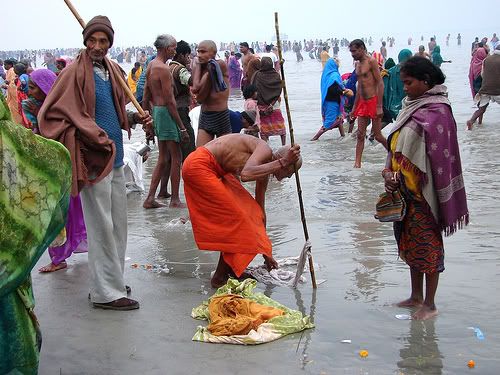
A dip in the ocean, where the Ganges drains into the sea is considered to be of great religious significance particularly on the Makar Sankranti day (mid-January) when the sun makes a transition to Capricorn from Saggitarius and this town becomes home to vast fairs, drawing visitors and recluses (sanyasis) from all over India.
I confess I am fascinated by Rajasthani folk music. Although I am not a native of Rajasthan and have not visited this majestic state more than a couple of times, I do not miss a chance to listen to it's folk music whenever I get an opportunity. Like me, I am sure there are millions out there, who have similar inclination towards this amazing music.
A little deviation from the main theme of this blog i.e hindustani classical music. It is a matter of pride to us, that not only common listeners like you and me, but famed international eateries like the Buddha Bar and the likes have included the exotic and ethnic sounds of Rajasthani folk in their playlists. Hindustani classical music artists like Ustad Sultan Khan, Zakir Hussain, Shubha Mudgal, Anoushka Shankar, besides many tribal artists feature prominently in the music there.
The Buddha Bar is an exclusive Buddha-themed bar and restaurant in Paris, France, serving Asian cuisine. The super-luxe Buddha Bar in Paris is a byword for high-end lounge bars. The Buddha Bar originally became popular because of the DJs choice of avant-garde 'Lounge' and 'Chill Out' genres of music. The Buddha Bar series was started by Claude Challe who compiled and produced the first two albums. The series continues with different producers like DJ Ravin, Sam Popat, Jean-Pierre Danel and David Visan. CDs have also been released using the music of the series. Compilation CDs of similar music are released under the Buddha Bar series by George V Records.
The Buddha Bar was started by Raymond Visan, who before he became a restaurateur was a parfumeur. The two-story dining area is dominated by a large statue of Buddha and the bar upstairs has a statue of large ornate dragon. His first giant Buddha made its appearance in 1996. Buddha Bar has also opened venues in London, Dubai, Beirut, New York and Cairo. Smaller versions named Little Buddha Bar are located in Las Vegas, Vienna, Hurghada and Sharm El-Sheikh.
Smooth transition of captivating World-Beats and mystic sound of Asian musical instruments, music plays an important role in a life of the Buddha Bar. While relaxing in the luxury of your guest room or dining in Buddha Bar Café, music will always be available and customizable to your moods. The DJs will distill musical selections to infuse your evenings with sensuality, reflecting the musical experience of millions of Buddha Bar CDs sold worldwide to demanding customers.
Treading the path shown by Buddha Bar, Café La Semeuse (20 years of never bitter coffee, is their slogan), a coffee production house has followed suit. For the true connoisseurs of the coffee, the Café La Semeuse company produces music CDs. In these CDs, the ethnic music of those countries, from where the company buys coffee beans, is presented. According to their belief, listening to the music of the country in which the coffee beans are grown, adds to the completeness of drinking sensation. Presented here are a few exclusive recordings of Rajasthani folk music by Café La Semeuse.
Café La Semeuse began 100 years ago in Switzerland, but it was in 1975, while on vacation, that Marc Greenberg, President of Café La Semeuse had the great good fortune of meeting the third-generation roaster of coffee, Marc Bloch, an encounter that would change his life.
For years Bloch sent La Semeuse coffee for Greenberg to enjoy. He knew from the very first sip that this was noticeably better than any other coffee he had ever encountered. Friends and family who tried it shared his excitement. He would later learn that it was in fact La Semeuse 'High Roasting' that made this coffee truly exceptional and delicious. His belief in the distinctiveness of this coffee was so strong that when Bloch dared him to introduce Café La Semeuse to his country - he took the dare...and never looked back.
So set out your coffee percolator, prepare a mug of La Semeuse coffee, relax on a couch and just chill out.
The above songs are exclusive field recordings of Café La Semeuse. As the names of the artists are not known, visitors are welcome to identify them on this blog.
Comments are welcome too.
Today's Tip : You may download a full album of Buddha Bar music by visiting it's website (click here). The playlist will autoplay after the page loads up, let it play for an hour or so and retrieve the songs from the Internet Explorer cache (read how-to in the musicindiaonline.com post). The songs are of CD quality (128 kbps) and worth the effort. Moreover they are in mp3 format.
As I write this post, news has already poured in : River Ganges has been declared the National River of India. Prime Minister of India, Manmohan Singh later announced : 'the emotional link between Ganga and Indians needs to be recognised'.
Bihar has immensely contributed to the hindustani classical music and has produced musicians like Bharat RatnaBismillah Khan and dhrupad singers like the Malliks (Darbhanga Gharana) (see previous post on the Malliks) and the Mishras (Bettiah Gharana). Bihar has a very old tradition of beautiful folk songs, sung during important family occasions, such as marriage, birth ceremonies, festivals, etc. They are sung mainly in group settings with the help of many musical instruments like Dholak, Bansuri and occasionally Tabla and Harmonium are used. Bihar also has a tradition of lively Holi songs known as 'Phagua', filled with fun rhythms.
During the 19th century, when the condition of Bihar worsened under the British misrule, many Biharis had to migrate as indentured laborers to West Indian islands, Fiji, and Mauritius. During this time many sad plays and songs called biraha became very popular, in the Bhojpur area. Dramas on that theme continue to be popular in the theaters of Patna.
Continuing our journey southwards along the bank of the Ganges we come across Mithila, a land shaded by old mango groves and watered by melt water rivers of Nepal and the Himalayas.
Mithila - Ropni Geet (sowing of paddy) : (Download)
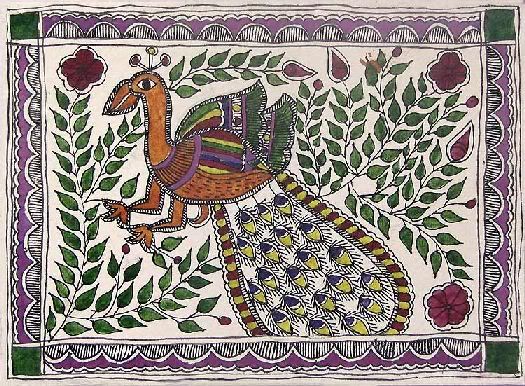
The men of Mithila have been famous as priests and scholars. The women largely illiterate, find cultural expression through exquisite paintings created for ritual occasions. They cover their courtyard walls in abstract images in brilliant colour.
In the 1960s some local officials realised that if the women would only put some of their paintings on paper there might be a worldwide market for their creations. They proved to be correct and it is a mild irony in Mithila that the fame of the women has surpassed that of the men, because Mithila Art, otherwise known as Madhubani Paintings also, is now recognised throughout the world.
Before commencing any further, a small 'statutory' warning. Please do not blame me if you find the links to the mp3 files in my posts to be dead, sooner or later. I do not know of a site that has hosted it's music files for more than a few years. The web is abundant with dead mp3 links. Already many of the songs that I had put in my previous posts have been removed by their host servers, and visitors on my blog have been sending me frantic complaints.
Amusingly mp3 files are like orphan kids, living on the streets, forever yearning for a permanent abode. They are more often than not, shunned after a few days of shelter offered by a kind soul. Ironically mp3 files are the most sought after but also the most hounded after files, always being chased by copyright laws. At first loved, then hated and feared by the webmasters, mp3 files are almost treated like live bombs amidst peace loving net-citizens. So don't be surprised, if you wake up one fine morning and find the links not working anymore and the files gone forever.
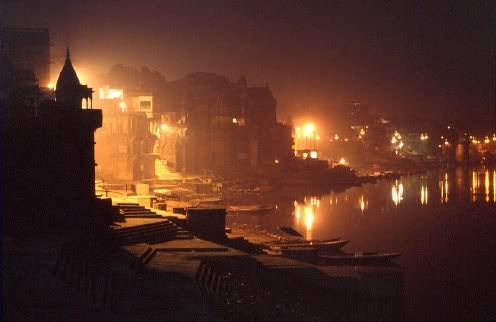
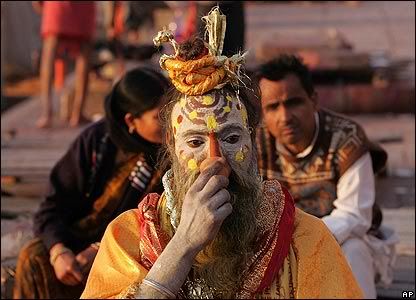
Continuing our journey along the holy river of Ganges, we arrive at Benares (Varanasi), the holiest city of the Hindus. The significance of Benares lies not only in the fact that it is considered so holy, but in the fact that it embodies the Hindu philosophy of death. Death for the Hindus is just one step forward in the endless cycle of birth and rebirth. And believers come to Benares to die or to cremate their departed relatives, believing that Lord Shiva himself whispers words of salvation into the ears of the dead here.
These words of salvation, Hindus believe, free their souls from the cycle of birth and rebirth, granting them moksha. Nowhere else do death and life coexist so closely as they do in Benares. Boatmen row, beggars beg, bathers bathe, and pilgrims pray.
The largest tributary to the Ganges is the Ghaghara, which meets it before Patna, in Bihar, bearing much of the Himalayan glacier melt from Northern Nepal. The Gandak, which comes from near Kathmandu, is another big Himalayan tributary. Other important rivers that merge with the Ganges are the Son, the Gomti which flows past Lucknow, and the Chambal made notorious by the ravines in its valley which are noted for lawlessness and banditry (including the infamous Phoolan Devi).
'The Ganges, above all is the river of India, which has held India's heart captive and drawn uncounted millions to her banks since the dawn of history. The story of the Ganges, from her source to the sea, from old times to new, is the story of India's civilization and culture, of the rise and fall of empires, of great and proud cities, of adventures of man...' - Jawaharlal NehruinDiscovery of India
Twenty centuries ago, the essential role of music of India was deemed to be purely ritualistic. Much part of Indian music is folk music. Indian classical music is said to have evolved out of the fusion of these. It is presumed that folk music existed long before the Aryans in India. Indian classical music has become unique in the world.
Hindustani music is an enveloping influence in Indian life. It pervades the big and small events of Indian life, from the birth of the child to it's death, religious rites and seasonal festivals. Originally, not all developments of music were transformed to writing. To keep their traditional integrity, they were imparted orally from master to pupil : the Guru Shishya tradition in gurukul.
Winding 2,510 km across northern India, from the Himalaya Mountains to the Indian Ocean, the Ganges river is NOT just a flowing body of H2O (water), but a whole culture and way of life to India. Innumerable stories, plays, songs, movies, history is woven along the wild journey of this mighty river. From the small but wild Himalayan birth to the mighty, fast paced or silent journey into the fertile Indo Gangetic Plain, and cities of Allahabad, Benaras, Patna and Kolkata, the Ganga is a major contributor to the political history and spiritual culture of this subcontinent.
'Voices along the Ganges' is an effort to take the listener on an odyssey down the river Ganges, from Gangotri to Kolkata. The rich music, a fusion of various instruments, permeates the senses infiltrating them with a soulful confluence. The compositions have been beautifully woven around a meditative pattern ranging from soft to rhythmic and highly energetic.
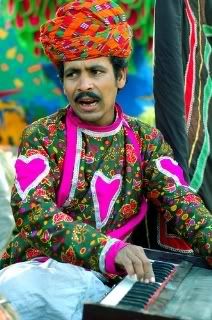
In Rajasthan, music plays a very important role in the life of the people. One of the finest folk music in the world, its rhythm, melody and diversity will fascinate and mesmerize you. The real folk song is not something to be read where the lyrics are read in a prosaic style. The real folk-song is not something to be read. The themes revolve around love, separation, heroism, patriotism, nature, seasons, festivals, rituals, customs and daily lives. The lyrics expressing the mundane, is also medium to reach the divine.
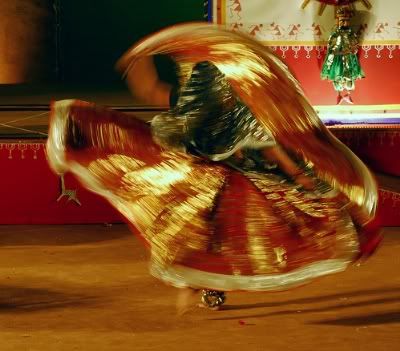
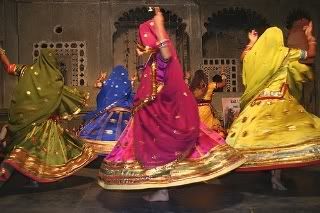
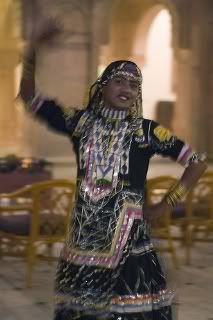
The people of Rajasthan live life to the hilt. After hard work in the harsh desert sun and the rocky terrain whenever they take time off they let themselves go in gay abandon. There is dancing, singing, drama, devotional music and puppet shows and other festivities, which transform the hardworking Rajasthani into a fun-loving and carefree individual. Each region has its own folk entertainment, the dance styles differ, as do the songs. Interestingly enough, even the musical instruments are different.
The most widely used ragas in Rajasthani folk songs are Mand, Bilawal, Kafi, Desh, Khamaj and Peelu. Some are in their pure forms and others in combinations. The folk songs nurture an element of Indian classical music knowing no rigid rules. The exclusive contribution of Rajasthani music to the classical music of India is Mand which is well recognized in classical circles.
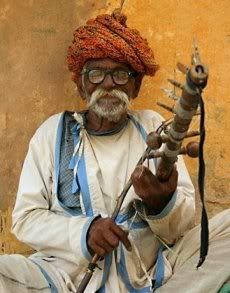
Rajasthani music makes use of six, seven or eight matras of Tal on the dholak, tabla and nagara. Madal, mridang, changri, naubhat, dhumso, dafra, khanjari, dhibko, apang, matki and damru are the other Tal instruments. The musical instruments used with folk songs help to keep the taal for the effective rendering of the music. These range from the soft tinklers to thunderous kettledrums, from simple flutes to fascinating trumpets. The Ravanhattha, Ektara and Sarangi are the stringed instruments used with folk songs.
The Kamaichi is another stringed instrument with twenty seven strings. Its shape is quite different from the Sarangi-Veena. It is worn round the neck and played in standing posture in certain areas of Mewar. The Rawaz is another instrument used by the Raos and the Bhats in Mewar. It has twelve strings and is played with a nakha instead of rod. There is a variety of instruments played by the mouth including the bansuri, algoza, satara, shehnai, toto, pungi, nad, bankia, conch and singi.
Songs sung by women, are mostly about water and is cantered around the well, the style is called 'Panihari'. 'Gorbund' is a famous folk song which depicts the process of preparing a decorative string for a camel. The other folk songs are 'Indhani', 'Lawarji', 'Jallo', 'Hichaki', 'Olyun', 'Sapno', 'Kurjan' etc. Songs, laden with religious flavor, are sometimes folk idioms of saints, Surdas, Kabirdas, Meerabai and others. In the ballad tradition, minstrels sing and narrate heroic tales of folk heroes like Tejaji, Gogaji and Ramdeoji and even of legendary lovers and their tragedies.
Ganesh Jogi & Teju Behan - Some Excerpts : (Download)
Rajasthan has a number of communities whose hereditary profession is to sing to entertain people. Music traditions are kept alive by entertainer communities like the Langas, Manganniyars, Mirasis and Dholis. Professional performers like the Bhaats, Dholis, Mirasis, Nats, Bhopas are omnipresent across the state. They are patronized by the villagers who participate actively in the shows put up by these traveling entertainers. The education of music in these groups begins early and is passed down from generation to generation. The folk musicians are expert in hindustani classical tradition too.
"Perhaps the most ambiguous genre of dance music, Trance music could be described as a melodic, more or less freeform style of music. While there is no strict definition for trance, songs of this genre are usually characterized as being accessible and having anthemic and psychedelic qualities. The best way to generally describe the trance genre is that of dance music based around rifts and anthems, which can be either highly energetic or very chilled out." - wikipedia
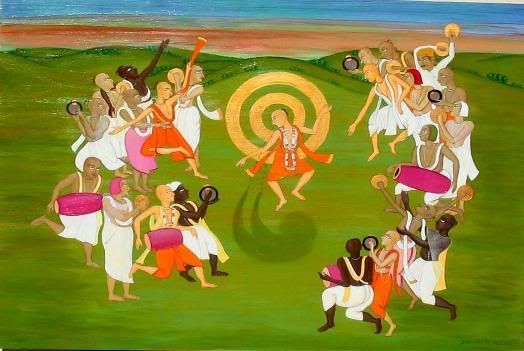
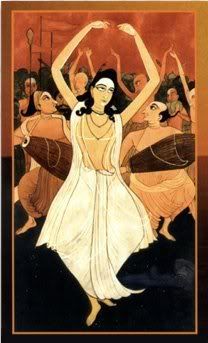
Now, whenever I listen to Trance music which I do quite often, it always reminds me of the similar psychedelic effect that the Kirtans or for that matter the Qawwalis of our sub continent produce on the listener.
By repeating simple mantras over and over, faster and faster, the kirtan is an easy way for people to experience some freedom from the daily chatter of the mind. And while it is true that we can sing these chants in the solitude of our own home, there is nothing like the magic of chanting live with musicians and hundreds of participants - from kids to seniors - all adding their energy to the chant. People often say they feel 'buzzed' for days following such a chanting experience.
So what gives us that buzz ?? Something about the kirtan experience goes beyond the music itself, goes to a deeper experience of vibration. We all resonate at different frequencies, and these frequencies change according to what we are doing and thinking. So when we are all doing the same thing - chanting, breathing, and moving to the same rhythms - our vibrations begin to synchronize and the resulting experience is very powerful. So even if you're having a truly rotten day, it may be difficult to hold onto those feelings during the chant experience. If you were only to sit in the room without participating, the idea is that you could still feel the shift. Something happens - the energy begins to activate the spirit that exists within us all.
Although the kirtan involves music, the underlying art of kirtan chanting is not actually about musical ability or training - it is about the heart. Everyone can participate, regardless of age or cultural background. The purpose of this music is to get us out of our heads and into our hearts. Typically, the songs can last for 20-30 minutes each with a few moments of silence in between each song so you can soak it all up. The longer songs allow for deeper experience of the effects, and with the simple, repetitive lyrics (it's a chant, after all !!) we really don't have to think much about the words.
In fact, because the ancient Sanskrit lyrics are not familiar to many of us, these words take us away from the mind's constant chatter a little easier. The powerful healing and transformational energies of these ancient chants can help to reconnect us to the Ever-Present and Eternal Being that lies within us all. All the mantras, melodies, and instruments of kirtan are designed to lead us toward this meditative state.
We provide floor seating in the traditional style of kirtan events in India (and yes, we also provide chairs for those who prefer chairs), and this living-room style music experience allows people to sink into themselves, to relax and ground themselves during the chants. Most of us spend the day in our heads, running here and there, thinking about where we have to be and what we have to do next. The kirtan gives us a time to come back to our center. And when this happens, beautiful things begin to unfold. Feelings of inspiration, peace, and a sense of connectedness are common experiences.
Kirtan helps the mind become quiet, and when the mind quiets, we can begin to perceive the mystical things, the sacred experiences, that are around us always. In the silence between the songs, when the song stops, you can feel something. And that something is you. There is no greater experience than the experience of one's Self. And that vibration is always within you, that vibration is you. That's the beauty of any chant experience - with little or no effort we can experience and enjoy the vibrations of peace, energy, healing and inspiration that are always within us.
' Siya Ram mai sab jag jani, karahun pranam jori jug pani ' - Tulsidas
Listen to this mesmerizing invocation by Jai Uttal on 'kirtan' and what it means to him :
Jai Uttal - An Introduction to Kirtan : (Download)
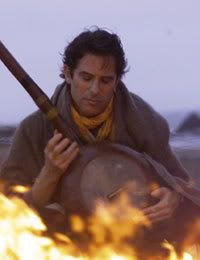
Until a few days ago if someone told me there was this singer called Jai Uttal, I would have shrugged it off. But today I am enchanted by this american man whose voice has enthralled me during the past few days.
I have listened to many of these american singers and preachers who have devoted most of their lives singing Hindu hymns and chants and have made a name for themselves in this special branch of hindustani classical music popularly known as bhajan, kirtan (or keertan) or chant as it is popularly known worldwide.
Krishna Das (not to be confused with Krishna Prema Das) is a well known name. Others are Bhagavan Das and Ram Dass to name a few. Some female voices are also known in India like Deva Premal and Jaya Lakshmi. Most of them are americans by birth (one of them is Irish as far as I remember) and all of them have made singing and teaching Hindu practices and Yoga as their profession. Most of them are also composing and singing 'Yoga Music' (as they call it) with the recent spurt in the popularity of Yoga worldwide notwithstanding.
But Jai Uttal is a little different from the other singers I have mentioned. He is Indian to the soul. Whereas other singers still retain their 'foreign' (or american) accent in their singing and inadvertently sound similar to ISKCON chanters, Jai Uttal sounds perfectly Indian. In fact due to his Indian sounding name and total sub continent accent I mistook him to be an Indian. Moreover his is a 'classically-trained-sounding' voice.
Incidently all the above mentioned male singers including Jai Uttal are known to be the disciples of Neem Karoli Baba, a revered saintly figure belonging to Akbarpur, Firozabad a town near Agra in India.
Jai Uttal has played Motown songs in cover bands and busked for change on the streets. Both of those experiences have stood him in good stead for his musical career, which finds his music straddling the divide between world and new age.
Born in New York City in 1952, Uttal grew up in the music business - his father worked for a record label - and at the age of seven he began piano lessons. Those were followed by banjo, guitar, and harmonica as Uttal began to discover American roots music, most especially the old-time banjo picking of Appalachian musician Roscoe Holcomb.
But his true spiritual epiphany came when he was 17 and first heard Indian music, which "touched my heart like sounds of my home," he said. "Then I got all the Indian albums I could, and jammed along on guitar with Ravi Shankar records."
His obsession became so great that at the age of 19 he headed for the West Coast, to study sarod and voice with the legendary Ali Akbar Khan. Eighteen months after that he traveled even further - to India itself, to experience the music and the culture first-hand. Renting a house in the Bengal city of Bhopur for $15 a month, he came to know singing street musicians the Bauls of Bengal, and started playing and traveling with them.
On his return to the U.S., he became more diligent in his study of Indian music, while supporting himself by playing guitar in bands whose material ranged from Motown covers to punk to blues.
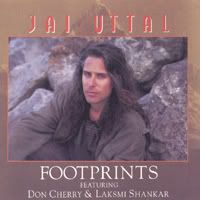
His break came in 1991 when Triloka released his debut, Footprints, which included an appearance by jazz and world music innovator Don Cherry. With his band, the Pagan Love Orchestra, Uttal continued to mine spiritual, Indian-inflected music two years later on Monkey, which hit the Top Ten on the world music charts. Uttal also found himself producing his mentor, Ali Akbar Khan, for two records, Journey and Garden of Dreams, which found the maestro working with a Western orchestra for the first time. Uttal's next release, 1994's Beggars and Saints was his tribute to the Bauls of Bengal, in thanks for his formative time in Bhopur.
Three years later came Shiva Station, which was mixed by innovative producer Bill Laswell. After that he concentrated on touring with his band rather than recording. A compilation of his four Triloka albums appeared as Spirit Room in July 2000, shortly before the self-released Live Kirtan and Pagan Remixes, which, along with remixes of three Pagan Love Orchestra tracks, was comprised of chanting by Uttal recorded live in a yoga studio. It was followed by another remix EP, Guru Brahma/Malkouns, which included two cuts mixed by Asian Underground star Talvin Singh.
Courtesy : Chris Nickson
Listen to Jai Uttal singing Guru Brahma in his ever enchanting voice :
I also urge you to listen to this captivating song Bajrangi which he has rendered in Raga Durga (please correct me if I am wrong) :
Find more music of Jai Uttal in my new music folder at eSnips : Indian.Raga.New.Age.