No festival of India is such an important constituent of our traditional classical and folk music as Holi. This festival of colors, is one that adorns our lives with the synergy of celebrative air and music. This joyous festival is in tune with the gaiety of the spring season when this festival is held. The windswept, withering, winter scene is truly dabbed away with the vibrant colors of blossoming flowers heralding spring, a time for the earth to rejuvenate. The refreshing southern breeze successfully chases out the chilly northern wind, in the Hindu month of 'Phalgun'. The fervor, fun and frolic of the festival reflect the essence of harvest and hope.
Ajoy Chakrabarty - Aaj Phagua Mein Hori Machi Hai :
Girija Devi & Shobha Gurtu - Bhijoyi Mori Chunari :
Ghulam Mustafa Khan - Piya Sang Khelun Hori :
Channulal Mishra - Barjori Karo Na Mose Hori Mein :
Holi is one of India's most vibrant and fun-filled festivals and it has a unique style and form in each part of the country that is reflected in the music that is associated with the festival. The musical forms associated with Holi vary from region to region as one travels from the north-west to extreme east of the country, down to the southern region. Primarily though, the compositions are based on the mythological references and tales from folklore.
Abida Parveen - Holi Khelan Aaya Piya : (Download)
Shobha Gurtu - Aaj Biraj Mein Holi Hai Rasiya : (Download)
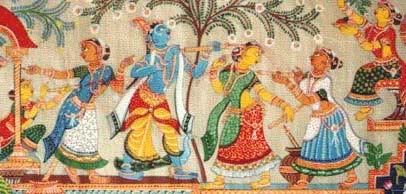
HoRi is the most popular type of Dhrupad sung on the festival of Holi. The compositions here describe the spring season. These compositions are mainly based on the love pranks of Krishna and Radha. Interestingly it has both classical as well as semi-classical connections. Horis sung as a concluding portion of a Dhrupad recital are classical in nature as well as treatment. Those Horis, which are sung in semi-classical form, are in ragas like Khamaj, Kafi etc. Significantly, these horis are also set to a tala of 14 beats called Deepchandi.