Kabir was born in Benares, India, probably around the year 1440. His birth itself is shrouded in mystery, some say he was the son of a Brahman widow, what is known though is that he was brought up in a family of muslim weavers. He was never formally educated and was almost completely illiterate. All of Kabir's recorded verses are in Hindi. The beauty of Kabir's poetry is that he picks up situations that surround our daily lives. Thus, even today, Kabir's poetry is relevant and helpful in both social and spiritual context. His lyrics are characterised by a free use of the vernacular, and is unfettered by the grammatical bonds of his day. It is this quality which has made his philosophy accessible to generations of Indians.
Kumar Gandharva - Ud Jayega Hans Akela : (Download)
Ashwini Bhide - Chadar Ho Gayi Bahut Purani : (Download)
Some of his dohas, as his two-line verses (couplets) are popularly called :

कबीरा खड़ा बाजार में, मांगे सब की खैर
ना काहू से दोस्ती, ना काहू से बैर।
साँईं इतना दीजिये, जामें कुटुम्ब समाये
मैं भी भूखा ना रहूँ, साधू ना भूखा जाये।
बुरा जो देखन में चला, बुरा ना मिलया कोई
जो मन खोजा आपना, मुझ से बुरा ना कोई।
माया मरी ना मन मरा, मर मर गये शरीर
आशा त्रिश्णा ना मरी, कह गये दास कबीर।
दुख में सुमिरन सब करें, सुख में करे ना कोये
जो सुख में सुमिरन करे, तो दुख काहे को होये।
चलती चक्की देख के, दिया कबीरा रोए
दो पाटन के बीच में, साबुत बचा ना कोए।
धीरे धीरे रे मना, धीरज से सब होये
माली सिंचे सौ घड़ा, ऋतु आये फ़ल होये।
ऐसी वाणी बोलिये, मन का आपा खोये
औरों को शीतल करे, आपहुँ शीतल होये।
जाती ना पूछो साधु की, पूछ लीजिये ज्ञान
मोल करो तलवार की, पड़ी रेहन जो म्यान।
माटी कहे कुम्हार से, काहे रोंदे मोहे
ईक दिन ऐसा आयेगा, मैं रौंदूगीं तोहे।
साधु ऐसा चाहिये, जैसा सूप सुहाय
सार सार को गही रहे, थोथा देय उडाय।
बड़ा हुआ तो क्या हुआ, जैसे पेड़ खजूर
पंथी को छाया नही, फल लगे अति दूर।
Early in his life Kabir became a disciple of the Hindu bhakti saint Ramanand. It was unusual for a Hindu teacher to accept a Muslim student, but tradition says the young Kabir found a creative way to overcome all objections. Not much is known about what sort of spiritual training Kabir may have received. He did not become a sadhu or renunciate. Kabir never abandoned worldly life, choosing instead to live the balanced life of a householder and mystic, tradesman and contemplative. Kabir was married, had children, and lived the simple life of a weaver.
Abida Parveen - Souun To Sapne Milun : (Download)
Jagjit Singh - Dohe : (Download)
Although Kabir labored to bring the often clashing religious cultures of Islam and Hinduism together, he was equally disdainful of professional piety in any form. This earned him the hatred and persecution of the religious authorities in Benares. Nearing age 60, he was denounced before the king but he was spared execution and instead, banished from the region. He subsequently lived a life of exile, traveling through northern India with a group of disciples. Legend says that he relinquished his body when he was about 120 years old. He died at Maghar near Gorakhpur, India.
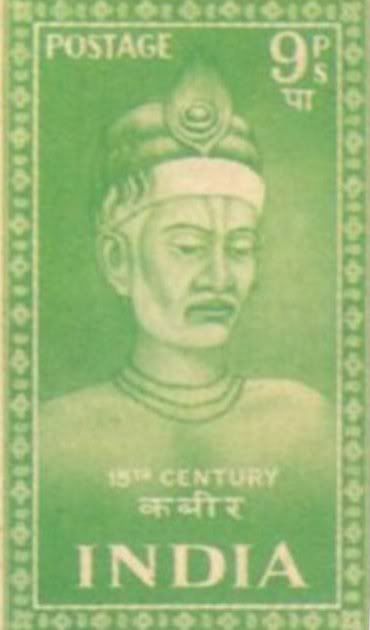
One of the most loved legends associated with Kabir is told of his funeral. Kabir's disciples disputed over his body, the Muslims wanting to claim the body for burial, the Hindus wanting to cremate the body. But, when they lifted the burial shroud, they found flowers where the body had rested. The flowers were divided, the Muslims buried the flowers while the Hindus reverently committed them to fire.
Comments are welcome.