Most connoisseurs of art feel this strong urge to display their own preferences and taste in that particular art form. Almost everytime, deep inside them, they wish to see nods of approval from others, that their taste is indeed perfect and deserving of a true evaluator. Here are some more gems from my favourite playlist of Hindustani classical music, subject to your nods ..and nudges, of course.
As we all know, Indian classical music is mostly based on the seasons of the year and even fine tuned to the hour of the day. Chaiti is sung in the month of Chait that falls in March or April as per the Hindu calendar. The Chaiti is a musical form derived from folk songs and its theme mostly revolves around romanticism and mood of love. These are certainly season specific songs. The Chaiti songs, like Kajri, have a place in semi classical form also. Most of the songs have wordings like Ho Rama or Are Rama. The lyrics are normally in the Purabi dialect, spoken in eastern Uttar Pradesh and parts of Bihar.
Some people are born to be self destructive.. like Adnan Sami. Take a look at his career graph. Once known to possess the fastest fingers on the piano keyboard, Adnan Sami took his classical music lessons from none other than Santoor maestro, Pandit Shivkumar Sharma. Two decades ago, in 1990 he, together with Tabla wizard Ustad Zakir Hussain, created music that can safely be termed as sheer magic. It was at a live concert in Karachi, Pakistan. Classical instrumental music, Adnan is playing the piano, cannot get better than this. Wonder why the two magicians never collaborated again. Also wonder why Adnan Sami made a mess of his career and ..personal life.
Adnan Sami & Zakir Hussain - Raga Durga :
Adnan Sami & Zakir Hussain - Folk Tune :
Adnan Sami & Zakir Hussain - Raga Bageshri :
Adnan Sami & Zakir Hussain - Dhun in Raga Khamaj :
During 1902-1908 many ordinary artists of that period recorded for The Gramophone Company. They were the Bais, Jans or Bandis, otherwise known as dancing girls or courtesans, living under the patronage of kings and wealthy zamindars (landlords). Most of them belonged to Delhi, Agra, Lucknow, Allahabad, Benares, Patna and Calcutta. Among these many non-descript dancer singers was one called Mohammad Bandi of Patna. Until 1908, it was customary for all artists to announce their names at the end of each recording. This was necessary to facilitate the record pressing company in making the record labels. Listen to Mohammad Bandi announcing her name at the end of first three songs. These recordings are very rare and of great historical importance.
Mohammad Bandi - Holi (1907) :
Mohammad Bandi - Barwa - Tori Banki Banki Chitwan (1907) :
Mohammad Bandi - Raga Sindhu Kafi (1907) :
Mohammad Bandi - Bayeen Nayan Mori Phadke (1908) :
The Jaipur Gharana (also known as the Jaipur-AtrauliGharana) is a Khayal based Gharana, founded by Ustad Alladiya Khan (1855-1946) in the late 19th century. An offshoot of the Agra Gharana, the Jaipur Gharana acquired its name and status as a Gharana in the early half of the 20th century as a result of the growing popularity of stalwarts of this Gharana like Kesarbai Kerkar, Mogubai Kurdikar, Mallikarjun Mansur and Kishori Amonkar.
The Gharana is unique in that it was the first Gharana to be founded in Khayal Gayaki, whereas other major Gharanas were initially founded as Dhrupad-Dhamar Gayakis and eventually evolved into the Khayal Gayaki. The founder of this Gharana, Ustad Alladiya Khan initially developed the unique Gayaki of this Gharana following the partial loss of his voice which prompted him to develop an adjusted singing style to accommodate this handicap. As a result of his exploration, he raised the level of musical and vocal artistry to such heights that he was acclaimed as the 'High Priest of Khayal Gayaki'.
Mallikarjun Mansur - Deshkar - Hu To Tore Karan Jagi :
Kishori Amonkar - Bhairavi - Koyaliya Na Bolo Dar :
Ulhas Kashalkar - Lalit Pancham - Udat Boondan :
Shruti Sadolikar - Bhairavi - Bajuband Khul Khul Jai :
Renowned names of Jaipur Gharana include Jitendra Abhisheki, Padmavati Shaligram, Manik Bhide, Ashwini Bhide Deshpande, Manjiri Asanare and many more, besides the artists mentioned at the beginning of this post. As is usual with most Gharanas, the list is long.

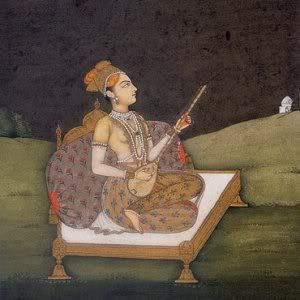


 raga bhimpalasi



